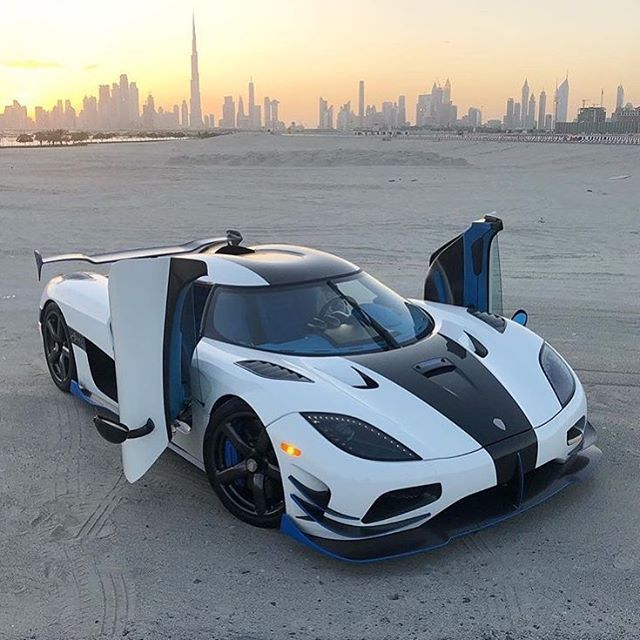
The Start of the WEC Season

Why Endurance Racing Matters More Than Ever for Collectors and Brands

Why Endurance Racing Matters More Than Ever for Collectors and Brands

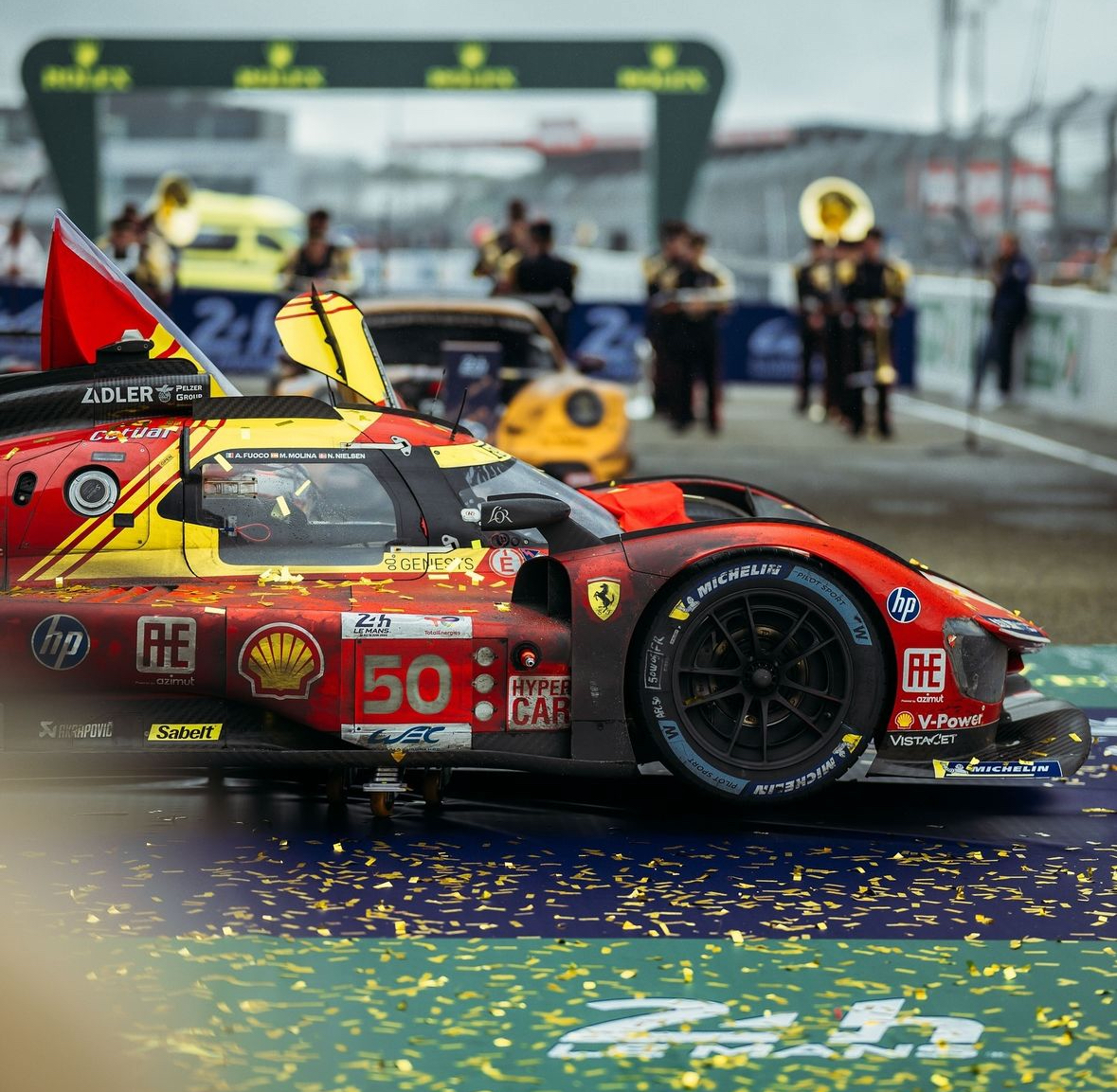
With the start of the new FIA World Endurance Championship (WEC) season, the spotlight once again turns to one of the most demanding and strategically complex forms of motorsport in the world.

But the relevance of endurance racing extends far beyond the racetrack.

For collectors, investors, and luxury brands, the WEC represents a powerful intersection of technology, heritage, and long-term value creation.


More Than Racing: A Global Stage for Innovation

Endurance racing has always been a testing ground.

Unlike sprint formats, the WEC is about:

  • Reliability over speed
  • Efficiency over excess
  • Strategy over pure performance

Manufacturers are not just competing—they are developing and validating technologies under extreme conditions.

Hybrid systems, lightweight materials, and energy efficiency concepts are all refined here before influencing road cars.

For brands, this makes the WEC one of the most relevant platforms to demonstrate engineering credibility and future readiness.


The Return of the Giants

The current era of the WEC is defined by something the industry has not seen in years:

The return of major manufacturers.

Ferrari, Toyota, Cadillac, Peugeot, Aston Martin, Alpine, BMW and in 2026 Genesis are investing heavily in the Hypercar and LMDh categories.

This signals a clear shift:

Endurance racing is once again becoming the center of prestige in motorsport.

For brands, participation is not just about winning races—it is about:

  • Strengthening brand identity
  • Connecting heritage with innovation
  • Positioning themselves in the ultra-luxury segment

Why This Matters for Collectors

For collectors, the WEC season is more than entertainment—it is a leading indicator.

Historically, vehicles linked to successful racing programs have shown strong long-term appreciation, especially when they combine:

  • Racing pedigree
  • Limited production
  • Technological significance
  • Strong brand heritage

The resurgence of endurance racing increases the relevance of:

  • Homologation models
  • Limited-edition hypercars
  • Road cars directly derived from race programs

Cars connected to WEC participation often gain cultural and financial value over time.


Motorsport as a Value Multiplier

In the world of collectible vehicles, storytelling matters.

A car is not just defined by its specifications—but by its narrative.

Endurance racing provides exactly that:

  • Legendary races like Le Mans
  • Historic rivalries between brands
  • Moments of innovation and breakthrough

For collectors, owning a vehicle linked to this ecosystem means owning a piece of that story.

And stories are one of the strongest drivers of long-term desirability.


Strategic Positioning for Brands

For manufacturers, the WEC is more than marketing—it is strategic positioning.

In a market increasingly shaped by electrification and sustainability, endurance racing allows brands to:

  • Demonstrate technological leadership
  • Maintain emotional connection to performance
  • Bridge the gap between heritage and future mobility

This is particularly important in the high-end segment, where brand perception directly influences value.


The Investment Perspective

The renewed importance of the WEC creates a clear signal for investors:

Moments of technological transition and competitive resurgence often coincide with new opportunities in the collector market.

As brands invest in racing programs, they often release:

  • Special editions
  • Limited production models
  • High-performance halo cars

These vehicles frequently become future collectibles—especially when acquired early and positioned correctly.


Looking Ahead

The start of the WEC season is not just the beginning of another racing calendar.

It is the continuation of a broader movement:

  • The return of endurance racing as a premium platform
  • The fusion of technology and heritage
  • The creation of new icons for the next generation of collectors

Final Thought

For those who understand the deeper dynamics of the automotive world, the WEC is more than a championship.

It is a signal.

A signal of where brands are heading.
Of which technologies will matter.
And of which vehicles may define the next era of collectibility.


Golden Falcon Consulting advises collectors, investors, and entrepreneurs on strategic opportunities in the world of exclusive vehicles and alternative assets.

  • The Start of the WEC Season

    Why Endurance Racing Matters More Than Ever for Collectors and Brands Why Endurance Racing Matters More Than Ever for Collectors and Brands With the start of the new FIA World Endurance Championship…

    admin Avatar

  • Endurance Racing & Business Leadership

    Why Managing a Company Is Like a Long-Distance Race At first glance, motorsport and business may seem worlds apart. One is driven by speed, adrenaline, and competition—while the other is defined by…

    admin Avatar

  • Energy Under Pressure

    Dubai’s Strategic Position in the Strait of Hormuz Crisis – and What Europe Can Learn Energy Under Pressure Dubai’s Strategic Position in the Strait of Hormuz Crisis – and What Europe Can…

    admin Avatar

Endurance Racing & Business Leadership

Why Managing a Company Is Like a Long-Distance Race

At first glance, motorsport and business may seem worlds apart. One is driven by speed, adrenaline, and competition—while the other is defined by strategy, structure, and long-term decision-making.

But when you look closer, especially at endurance racing, the parallels become striking.

Because in both worlds, success is not defined by short-term performance.
It is defined by consistency, resilience, and execution over time.


It Always Starts with Passion

Every endurance racing project begins the same way:

With a deep passion.
A vision.
A clear idea of creating something meaningful.

Drivers, engineers, and teams invest countless hours—not just for results, but for the feeling of building something extraordinary.

Entrepreneurship starts in exactly the same place.

Behind every successful company is a founder who once had:

  • A strong internal drive
  • A clear vision
  • The desire to create something that matters

Without this foundation, neither racing teams nor companies survive the long run.


The Right Team Is Everything

In endurance racing, no driver wins alone.

It’s about:

  • Engineers
  • Strategists
  • Mechanics
  • Drivers working in perfect coordination

One weak link can cost the entire race.

The same applies to business.

A company is only as strong as the team behind it.
Hiring decisions, leadership structure, and internal culture determine whether a company can perform under pressure.

Talent wins races. Teams win championships.


Choosing the Right “Machine”

In motorsport, the choice of car is critical.

Performance, reliability, adaptability—these define competitiveness.

In business, the “machine” is your product or service.

  • Is it scalable?
  • Is it competitive?
  • Does it solve a real problem?

The best strategy cannot compensate for a fundamentally weak product—just as even the best driver cannot win with the wrong car.


Strategy Beats Speed

Endurance racing is not about who is fastest for one lap.

It’s about:

  • Tire management
  • Fuel strategy
  • Pit stop timing
  • Risk control

The fastest car often does not win.
The smartest team does.

In business, the same rule applies.

Growth without strategy leads to instability.
Speed without structure leads to failure.

Sustainable success comes from:

  • Clear positioning
  • Strategic decision-making
  • Long-term thinking

Handling the Unexpected

In endurance racing, challenges are not exceptions—they are expected:

  • Weather changes
  • Technical issues
  • Accidents
  • Strategy shifts

The difference between winning and losing lies in how teams respond.

Successful companies operate the same way.

Market shifts, crises, and unexpected disruptions are part of the journey—not anomalies.

The key capability is:

Adaptability under pressure.


Focus on the Long Game

Endurance races are measured in hours—sometimes even 24 hours.

There is no room for emotional overreaction.
No room for short-term thinking.

Every decision is made with the finish line in mind.

This is where many companies fail.

They focus on:

  • Quarterly results
  • Short-term gains
  • Immediate wins

But true business success is built over years—not weeks.


What Entrepreneurs Can Learn

Endurance racing teaches a powerful lesson:

Success is not about being the fastest once.
It is about being consistent, prepared, and strategic over time.

Entrepreneurs who understand this:

  • Build stronger companies
  • Navigate crises better
  • Create sustainable growth

And What Motorsport Can Learn from Business

The exchange goes both ways.

Modern motorsport increasingly adopts:

  • Data-driven decision-making
  • Financial discipline
  • Organizational structures from the corporate world

The most successful teams operate like high-performance companies.


Final Thought

Whether on the racetrack or in the boardroom, the principle remains the same:

Clarity of vision.
Strength of team.
Consistency of execution.

Because in the end:

It’s not about who starts the fastest.
It’s about who finishes strongest.


Golden Falcon Consulting supports entrepreneurs and leaders in building resilient, high-performance organizations in dynamic environments.

Energy Under Pressure

Dubai’s Strategic Position in the Strait of Hormuz Crisis – and What Europe Can Learn

Energy Under Pressure

Dubai’s Strategic Position in the Strait of Hormuz Crisis – and What Europe Can Learn

The ongoing tensions surrounding the Strait of Hormuz have once again exposed one of the most critical vulnerabilities in the global economy: energy security.

With nearly 20% of the world’s oil and liquefied natural gas passing through this narrow corridor, any disruption immediately sends shockwaves through global markets. ()

But while the crisis is global in nature, its impact is not evenly distributed.

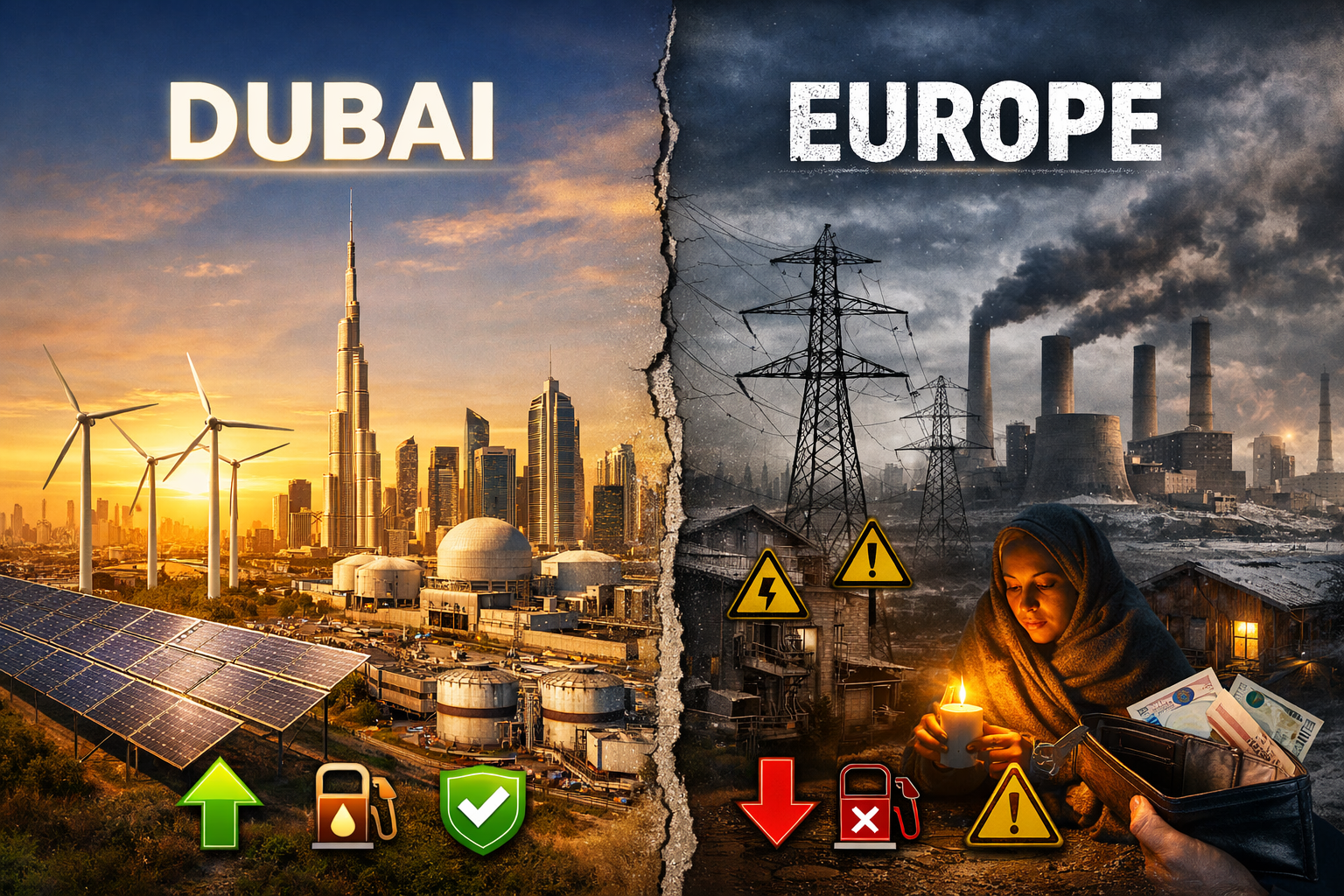
The contrast between Dubai (and the UAE) and Europe reveals two fundamentally different approaches to energy resilience—and two very different outlooks for the future.


The Strait of Hormuz: A Global Bottleneck

The current conflict has significantly reduced energy flows through the Strait, leading to:

  • Severe supply disruptions
  • Sharp increases in oil and gas prices
  • Volatility across global energy markets

In fact, analysts describe the situation as one of the largest energy supply disruptions in modern history, with cascading effects on inflation, logistics, and industrial production. ()

For energy-importing regions, the consequences are immediate and severe.


Europe: Structural Vulnerability Exposed

Europe is once again facing a familiar challenge: dependence.

Despite efforts to diversify after the 2022 energy crisis, the continent remains heavily reliant on imported energy—particularly LNG. The disruption of Qatari supply and reduced flows through Hormuz have led to:

  • Gas price increases of over 60–70%
  • Tight supply of refined fuels such as diesel and jet fuel
  • Increased risk of industrial slowdown and inflation

()

In some cases, governments are already reconsidering energy transition goals in favor of short-term supply security.

The key issue is structural:
Europe consumes energy—it does not control its flow.


Dubai and the UAE: From Exposure to Strategic Positioning

At first glance, the UAE appears equally exposed. A large portion of its exports also passes through the Strait of Hormuz.

However, the strategic reality is very different.

The UAE has spent years investing in energy diversification, infrastructure, and redundancy, including:

  • Pipeline routes bypassing the Strait (partial mitigation capacity) ()
  • A diversified energy mix including nuclear (Barakah) and renewables
  • Strong domestic energy production capacity
  • Strategic reserves and integrated energy companies (e.g., ADNOC)

Unlike Europe, the UAE is not just a consumer—it is a producer, exporter, and infrastructure player.

This fundamentally changes its position in times of crisis.


Short-Term Impact on Dubai

Dubai, as a trade and logistics hub, is not immune to disruption. The current situation can lead to:

  • Increased shipping and insurance costs
  • Temporary volatility in trade flows
  • Higher operational costs in logistics and aviation

Additionally, oil price spikes—reaching extreme levels in recent weeks—create broader market uncertainty. ()

However, these effects are largely operational, not structural.


The Strategic Shift: Dubai as a Safe Energy Hub

While Europe is managing scarcity, Dubai is benefiting from repositioning dynamics.

In times of crisis, capital and business activity tend to move toward:

  • Stable jurisdictions
  • Energy-secure environments
  • Logistically connected hubs

Dubai checks all three boxes.

As a result, the crisis is accelerating several trends:

  • Relocation of regional headquarters to the UAE
  • Increased demand for energy trading and intermediary services
  • Growth in infrastructure investment and logistics
  • Strengthening of Dubai’s role as a global energy pricing and trading hub

The key insight:

Dubai is not defined by the crisis—it is increasingly defined as the solution to it.


Looking Ahead: Two Different Futures

The divergence between Europe and Dubai is likely to widen.

Europe’s Outlook:

  • Continued vulnerability to external supply shocks
  • High and volatile energy prices
  • Structural pressure on industry and competitiveness

Dubai’s Outlook:

  • Strengthened role as an energy and trade hub
  • Increased strategic importance in global supply chains
  • Long-term attractiveness for capital and business relocation

The Strait of Hormuz crisis is not just a disruption.
It is a catalyst accelerating an already ongoing shift in global energy power.


Strategic Implications for Investors and Businesses

For decision-makers, the implications are clear:

  • Energy security is now a core investment criterion
  • Geographic positioning matters more than ever
  • Stable, diversified hubs will outperform volatile regions

At Golden Falcon Consulting, we support clients in understanding these shifts—not only to manage risk, but to position ahead of structural change.

Because in today’s world, energy is not just a commodity.

It is strategy.


Golden Falcon Consulting advises investors and companies on geopolitical risk, market positioning, and strategic opportunities across the Middle East and global markets.

DUBAI AT THE CROSSROADS

Blog

Dubai at the Crossroads: The Strait of Hormuz Tensions and Emerging Opportunities

The Strait of Hormuz has once again moved into the global spotlight. As one of the most critical maritime chokepoints in the world—through which a significant portion of global oil and gas supply flows—any instability in this corridor immediately impacts global markets, regional security, and investor sentiment.

For Dubai and the wider UAE, the situation presents both serious challenges and strategic opportunities.


A Critical Artery Under Pressure

The Strait of Hormuz is not just a regional concern—it is a global economic lifeline. Any disruption, whether through geopolitical escalation or security incidents, has immediate consequences:

  • Rising energy prices
  • Increased shipping insurance and logistics costs
  • Supply chain uncertainty
  • Heightened investor caution

For a trade-driven hub like Dubai, these factors cannot be ignored. The emirate’s role as a logistics, re-export, and financial center is closely tied to stable global trade flows.

However, Dubai’s strength has always been its ability to adapt faster than the challenges it faces.


Dubai’s Strategic Position: Built for Resilience

Unlike many regional economies, Dubai is not dependent on oil exports. Over the years, it has transformed into a diversified global hub with strengths in:

  • Trade and logistics
  • Financial services
  • Tourism and hospitality
  • Real estate and investment

This diversification acts as a buffer during periods of geopolitical stress.

Additionally, the UAE has invested heavily in alternative infrastructure and strategic routes—reducing its exposure to single points of failure. Ports, free zones, and global connectivity continue to position Dubai as a reliable gateway between East and West, even when regional tensions rise.


Short-Term Challenges: Market Reactions

In the immediate term, tensions around the Strait of Hormuz can lead to:

  • Temporary slowdown in certain trade flows
  • Increased operational costs for logistics and shipping companies
  • Volatility in regional investment sentiment

Some businesses may adopt a “wait-and-see” approach, delaying expansion or reallocating risk.

But this is only one side of the picture.


The Opportunity Shift: Capital Flows Toward Stability

History shows a consistent pattern:

When uncertainty rises in the region, capital does not disappear—it relocates.

Dubai often becomes the primary beneficiary of this shift.

Investors, entrepreneurs, and international companies look for:

  • Political stability
  • Strong regulatory frameworks
  • Global connectivity
  • Safe environments for capital and operations

Dubai offers all of these.

As a result, periods of geopolitical tension frequently lead to:

  • Increased demand in real estate
  • Growth in financial and advisory services
  • Relocation of regional headquarters
  • Expansion of trading and intermediary activities

In essence, Dubai transforms from being “near the risk” to becoming the solution to it.


Strategic Outlook: Beyond the Crisis

The current situation around the Strait of Hormuz is fluid, and its long-term trajectory remains uncertain. However, several structural trends are likely to continue:

  1. Diversification of global supply chains
  2. Increased demand for stable regional hubs
  3. Growth of alternative logistics and trade routes
  4. Rising importance of politically neutral business environments

Dubai is uniquely positioned at the intersection of all these developments.


Positioning for the Future

For investors and businesses, the key question is not whether challenges exist—but how to position strategically in response.

Moments like these often create:

  • Entry opportunities in real estate and business acquisitions
  • Demand for advisory, restructuring, and consulting services
  • New partnerships and regional expansions

Those who act early—guided by strategy rather than uncertainty—are typically the ones who benefit most.


Our Perspective at Golden Falcon Consulting

At Golden Falcon Consulting, we support clients in navigating complex geopolitical environments and translating uncertainty into strategic advantage.

We combine regional insight, global perspective, and access to key networks to help investors and entrepreneurs:

  • Identify emerging opportunities
  • Mitigate geopolitical risks
  • Structure sustainable market entry strategies

Because in today’s world, resilience is not just about protection.

It is about positioning ahead of change.


Golden Falcon Consulting advises investors, entrepreneurs, and family offices on strategic opportunities in dynamic global markets, with a strong focus on the Middle East.

  • The Start of the WEC Season

    Why Endurance Racing Matters More Than Ever for Collectors and Brands Why Endurance Racing Matters More Than Ever for Collectors and Brands With the start of the new FIA World Endurance Championship…

    admin Avatar

  • Endurance Racing & Business Leadership

    Why Managing a Company Is Like a Long-Distance Race At first glance, motorsport and business may seem worlds apart. One is driven by speed, adrenaline, and competition—while the other is defined by…

    admin Avatar

  • Energy Under Pressure

    Dubai’s Strategic Position in the Strait of Hormuz Crisis – and What Europe Can Learn Energy Under Pressure Dubai’s Strategic Position in the Strait of Hormuz Crisis – and What Europe Can…

    admin Avatar

INVESTING IN PASSION

EXCLUSIVE VEHICLES

Investing in Passion: How We Advise on Exclusive Vehicle Collections in Uncertain Times

In periods of geopolitical tension, economic volatility, and shifting financial markets, investors naturally look for stability. Traditional asset classes—stocks, bonds, even real estate—can become unpredictable. It is precisely in these moments that alternative investments gain relevance.

One asset class that continues to attract sophisticated investors is the collection of exclusive and classic vehicles.

At Golden Falcon Consulting, we advise clients not only on acquiring exceptional automobiles—but on building structured, strategic collections that function as long-term investments.


Why Classic and Exclusive Cars Matter Today

Classic and collectible vehicles are more than luxury items—they are tangible assets with intrinsic and emotional value. Unlike purely financial instruments, they combine scarcity, craftsmanship, and history.

The global market reflects this growing importance. The classic car industry is projected to grow significantly in the coming years, reaching substantial long-term expansion driven by collector demand and global wealth creation (marketresearchfuture.com).

At the same time, these assets behave differently from traditional markets. Their value is not driven solely by macroeconomics, but by rarity, provenance, and desirability among collectors (Autofolio Private Sales).


A Market in Transition: Challenge Creates Entry Points

The current market environment is particularly interesting.

After years of strong growth, the collector car market has entered a phase of stabilization. In many segments, prices have softened or remained stable, with a large portion of vehicles seeing little or no appreciation in the short term (The Autopian).

At first glance, this may appear as a weakness.

From an investor’s perspective, however, it creates opportunity.

Historically, the best acquisitions are not made at market peaks—but during phases of uncertainty, when sellers are more flexible and selection is broader.

Even in a cooling market, certain segments—especially rare models, modern classics, and vehicles with strong heritage—continue to show growth potential (Hagerty UK).


What Defines a Strong Automotive Investment?

Our advisory approach is based on clear criteria. Not every luxury car is an investment—and not every classic will appreciate.

We focus on:

  • Rarity and limited production numbers
  • Historical significance or racing pedigree
  • Brand strength (e.g., Ferrari, Porsche, Aston Martin)
  • Original condition and documented provenance
  • Market timing and entry price

Iconic models such as the Porsche 911, Mercedes-Benz 300SL, or Aston Martin DB5 remain prime examples of vehicles with long-term appreciation potential (classiccarshop.co.uk).

In the high-end segment, exclusivity plays a decisive role. Limited production strategies—particularly by luxury manufacturers—continue to drive demand and maintain long-term value.


Building a Collection, Not Just Buying Cars

A key difference between enthusiasts and investors lies in strategy.

We do not advise clients to simply “buy cars.”
We guide them in building curated collections.

This includes:

  • Portfolio diversification across different eras and categories
  • Geographic sourcing and acquisition strategy
  • Storage, maintenance, and preservation planning
  • Documentation and authentication (critical for long-term value)
  • Exit strategies and timing

A well-structured collection can behave similarly to a diversified investment portfolio—balancing risk while capturing upside potential.


Performance Beyond Numbers

Exclusive vehicles offer something most assets cannot: emotional return.

They are experiences, heritage, and identity.

Yet the financial side should not be underestimated. Real-world examples show that well-managed collections can generate substantial long-term returns, particularly when acquired strategically and held over time (TheStreet).


Why Now?

In uncertain times, capital seeks both safety and distinction.

Luxury collectibles—including rare vehicles—are increasingly viewed as a hedge against volatility. They are less correlated with traditional markets and often benefit from global wealth trends and scarcity dynamics.

Periods of hesitation in the market can be the ideal moment to enter—before the next growth cycle begins.


Our Approach at Golden Falcon Consulting

We combine market intelligence, network access, and strategic advisory to support clients in building high-quality automotive portfolios.

Our role is not only to identify exceptional vehicles—but to align each acquisition with a broader investment strategy.

Because in today’s environment, success is not about reacting to uncertainty.

It is about positioning ahead of it.


Golden Falcon Consulting advises investors and entrepreneurs on alternative assets, strategic positioning, and opportunities in dynamic global markets.

  • The Start of the WEC Season

    Why Endurance Racing Matters More Than Ever for Collectors and Brands Why Endurance Racing Matters More Than Ever for Collectors and Brands With the start of the new FIA World Endurance Championship…

    admin Avatar

  • Endurance Racing & Business Leadership

    Why Managing a Company Is Like a Long-Distance Race At first glance, motorsport and business may seem worlds apart. One is driven by speed, adrenaline, and competition—while the other is defined by…

    admin Avatar

  • Energy Under Pressure

    Dubai’s Strategic Position in the Strait of Hormuz Crisis – and What Europe Can Learn Energy Under Pressure Dubai’s Strategic Position in the Strait of Hormuz Crisis – and What Europe Can…

    admin Avatar

Between uncertainly and opportunity

Dubai between uncertainty and opportunity: navigating the current Iran conflict

In times of geopolitical tension, markets react quickly. Investors pause, companies reassess their exposure, and many individuals look for safer ground. The current escalation surrounding the Iran conflict has once again created uncertainty across the Middle East. Headlines focus on risks, instability, and potential disruptions. Yet in cities like Dubai, the story is more complex.

While some choose to leave the region temporarily, others see a different reality emerging—one defined not only by risk, but also by opportunity.

A region used to managing uncertainty

The Middle East has long been shaped by geopolitical dynamics. Governments, businesses, and residents have developed a strong ability to adapt to changing conditions. Dubai, in particular, has built its reputation on stability, diversification, and resilience.

Over the past two decades, the emirate has deliberately positioned itself as a safe economic hub within a volatile region. Its infrastructure, regulatory environment, and international connectivity make it a strategic base for companies that want access to the Middle East, Africa, and Asia.

Periods of regional tension often highlight exactly why Dubai has become such an important center for global business.

When some leave, others arrive

Whenever geopolitical risks rise, a familiar pattern appears. Some expatriates relocate temporarily, multinational companies reassess regional strategies, and investors become cautious.

At the same time, new actors enter the market.

Entrepreneurs, family offices, and international investors often view uncertainty as a moment to reposition themselves. Real estate demand can increase, new businesses are established, and capital flows toward stable jurisdictions within the region.

Dubai frequently becomes the destination of choice.

This dynamic is not new. During previous periods of regional instability, Dubai experienced increased investment in property, logistics, and financial services. The emirate’s role as a neutral and business-friendly hub continues to attract those seeking both security and growth potential.

The strategic advantage of Dubai

Dubai’s response to regional crises is rarely reactive—it is strategic.

Several structural factors contribute to its resilience:

  • Political stability and security
  • A diversified economy beyond oil
  • World-class logistics and connectivity
  • Business-friendly regulations and tax advantages
  • A strong international community

These elements allow Dubai to absorb regional shocks better than many other markets. Instead of being defined by geopolitical tensions, the city often becomes the place where businesses reorganize their regional strategies.

Opportunity in times of change

For entrepreneurs and investors, periods of uncertainty often create windows of opportunity.

Companies looking to relocate operations may establish new regional headquarters. Investors searching for stable jurisdictions may diversify into Dubai’s property or business landscape. Consulting, logistics, financial services, and trade sectors can experience renewed activity.

This does not mean ignoring the seriousness of geopolitical developments. Rather, it means understanding that markets rarely move in only one direction. Risk and opportunity often emerge simultaneously.

Looking ahead

The situation surrounding Iran remains fluid, and the broader implications for the region are still unfolding. However, one lesson from past crises remains clear: cities that combine stability with openness to global business tend to attract capital and talent during uncertain times.

Dubai has repeatedly demonstrated its ability to turn regional challenges into strategic advantages.

For businesses and investors with a long-term perspective, moments like these are not only about managing risk—they are also about recognizing where the next opportunities may arise.


Golden Falcon Consulting supports investors and entrepreneurs navigating complex regional environments, helping them identify opportunities even in uncertain times.

Growth to success

Growth is what every human being strives for. It is the striving for complete expression of the formless intelligence inherent in every human being. The desire for growth is intrinsic to all of nature. It is the fundamental impulse of the universe. All human activity is based on the pursuit of growth. People strive for more food, more clothing, better shelter, more luxury, more beauty, more knowledge, more pleasure—for more life. This need for continuous progress is at work in every living being.