Beyond €40 Billion: What the UAE–Germany Partnership Means for Entrepreneurs and Investors
The UAE President’s state visit to Germany signals a deeper economic relationship. The real opportunity lies in connecting capital, expertise and market access—and turning political ambition into commercially viable projects.
By Marc Kollmeier | Golden Falcon Consulting
12 September 2026
When governments announce investments worth billions, the numbers dominate the headlines. For business leaders, however, the more important questions come afterwards: Where will the money go? Which capabilities are needed? And how can an individual company participate?
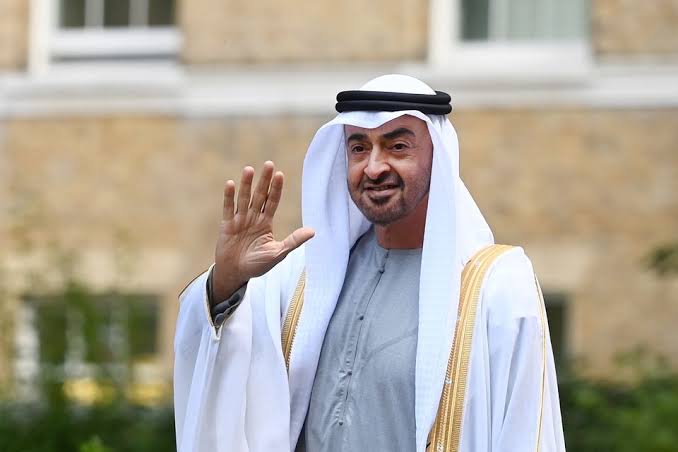
The state visit of UAE President His Highness Sheikh Mohamed bin Zayed Al Nahyan to Germany, from 9 to 11 September 2026, provides a timely reason to ask those questions. It was the first state visit by a President of the United Arab Emirates to Germany, with discussions focused on strengthening the countries’ strategic relationship.
My view is that this development should be understood neither as a rescue package for Germany nor as a simple story about the UAE’s financial strength.
It is an opportunity to connect complementary strengths—provided the projects make commercial sense and the partners can deliver.
The Headline Is €40 Billion. The Real Test Is Execution.
During the visit, the UAE announced plans to invest €40 billion in Germany, targeting sectors including industry, advanced technology, artificial intelligence, digital infrastructure and energy.
The German government also reported the signing of 29 business-to-business memoranda of understanding and agreements, with an aggregate stated value exceeding €9.3 billion. Plans for a German–UAE Investment Council and a new Strategic Dialogue are intended to support more sustained cooperation.
These are significant commitments of intent. But an announcement is not the same as completed investment, and a memorandum is not the same as an operating project.
Business leaders should therefore distinguish between political support, preliminary agreements, final commercial commitments and actual implementation. The different announced figures should not simply be added together or treated as immediately available funding.
The meaningful indicators will be project approvals, financing, contracts, construction, procurement and operating results.
A signature creates momentum. Execution creates value.
What the UAE Is Seeking: Capabilities, Not Just Returns
The UAE’s official explanation for the investment highlights confidence in Germany’s industrial, technological and research capabilities. It also identifies a reciprocal objective: using closer cooperation to support the UAE’s own knowledge- and innovation-driven economic development.
My interpretation is that the strategy extends beyond acquiring assets. It is also about building relationships with companies whose expertise can contribute to future industries.
For entrepreneurs, this offers an important lesson.
An investment should not be judged solely by its immediate financial return. It is also worth asking whether it provides access to expertise, customers, technology or capabilities that would otherwise take years to develop.
That does not remove the need for a sound financial case. It broadens the strategic questions behind it.
The strongest partnership is not necessarily the one with the most capital. It is the one in which each side brings something the other genuinely needs.
Germany Remains Relevant—But Capital Cannot Replace Reform
The UAE’s interest in German capabilities challenges the simplistic assumption that Germany has nothing left to offer international investors. At the same time, an investment announcement should not be treated as proof that the country’s business environment needs no improvement.
Germany’s DIHK business survey in early summer 2026 found that 70% of participating companies identified energy and raw-material prices as a business risk, while 58% cited economic policy conditions. These findings illustrate the pressures that businesses themselves were reporting.
My conclusion is straightforward: attracting capital and enabling productive investment are two different tasks.
For the announced projects to succeed, Germany needs workable permitting processes, reliable infrastructure, commercially viable energy arrangements and predictable decisions.
International investors should assess those conditions project by project rather than relying on either political optimism or sweeping criticism.
The quality of a German company and the quality of its operating environment are separate questions. A serious assessment examines both.
Energy Cooperation: Planning for the Next Decade
Energy provides a concrete example of the partnership’s long-term character.
RWE and Masdar have signed a memorandum to consider joint participation in German offshore wind auctions in 2027. RWE and ADNOC have also signed a letter of intent to develop potential long-term liquefied natural gas supply arrangements, with the contemplated deliveries beginning in the early 2030s.
These initiatives concern future supply and infrastructure. They should not be presented as an immediate solution to today’s energy-price pressures or shipping disruptions.
For business leaders, the broader principle is useful: resilience requires planning beyond the next purchasing cycle.
A company considering a new facility, production line or long-term supply agreement should examine how its energy requirements will be met under different conditions—not merely whether today’s price is attractive.
Diversification should create alternatives, rather than replace one concentrated dependency with another.
The Opportunity Extends Beyond Major Corporations
The announced corporate agreements cover more than energy supply. ADNOC reported cooperation involving German companies in advanced technology, artificial intelligence, materials and energy infrastructure, including agreements with Bosch Middle East, Siemens Energy and Siemens Industrial.
In my assessment, these areas could create opportunities for specialist suppliers, engineering businesses, technical service providers and implementation partners. That is a potential consequence of future projects—not a claim that contracts are already available to every interested company.
For a German business, the starting question might be:
Which part of our expertise solves a specific problem for a UAE customer or project partner?
For a UAE-based company, the corresponding question could be:
Which German capability would strengthen our offering, operations or expansion plans?
Those questions are more productive than a general ambition to “enter the market.”
A focused partnership around a defined customer need may be a better starting point than immediately establishing a new office or pursuing an acquisition.
Political momentum can justify closer investigation. Customer demand must justify the business.
Not “Germany or Dubai”—But the Right Role for Each Location
As a German entrepreneur working from Dubai, I would approach this development through a practical question:
Which activities should be located where to make the business stronger?
A company might retain development and specialist production in Germany while assessing a UAE presence for regional sales or customer support. Another might cooperate with an established local partner rather than create a separate operation.
These are possible structures, not universal recommendations.
The appropriate choice depends on the customers, margins, delivery requirements, management capacity and costs involved. A second location only adds value when its contribution exceeds the complexity it introduces.
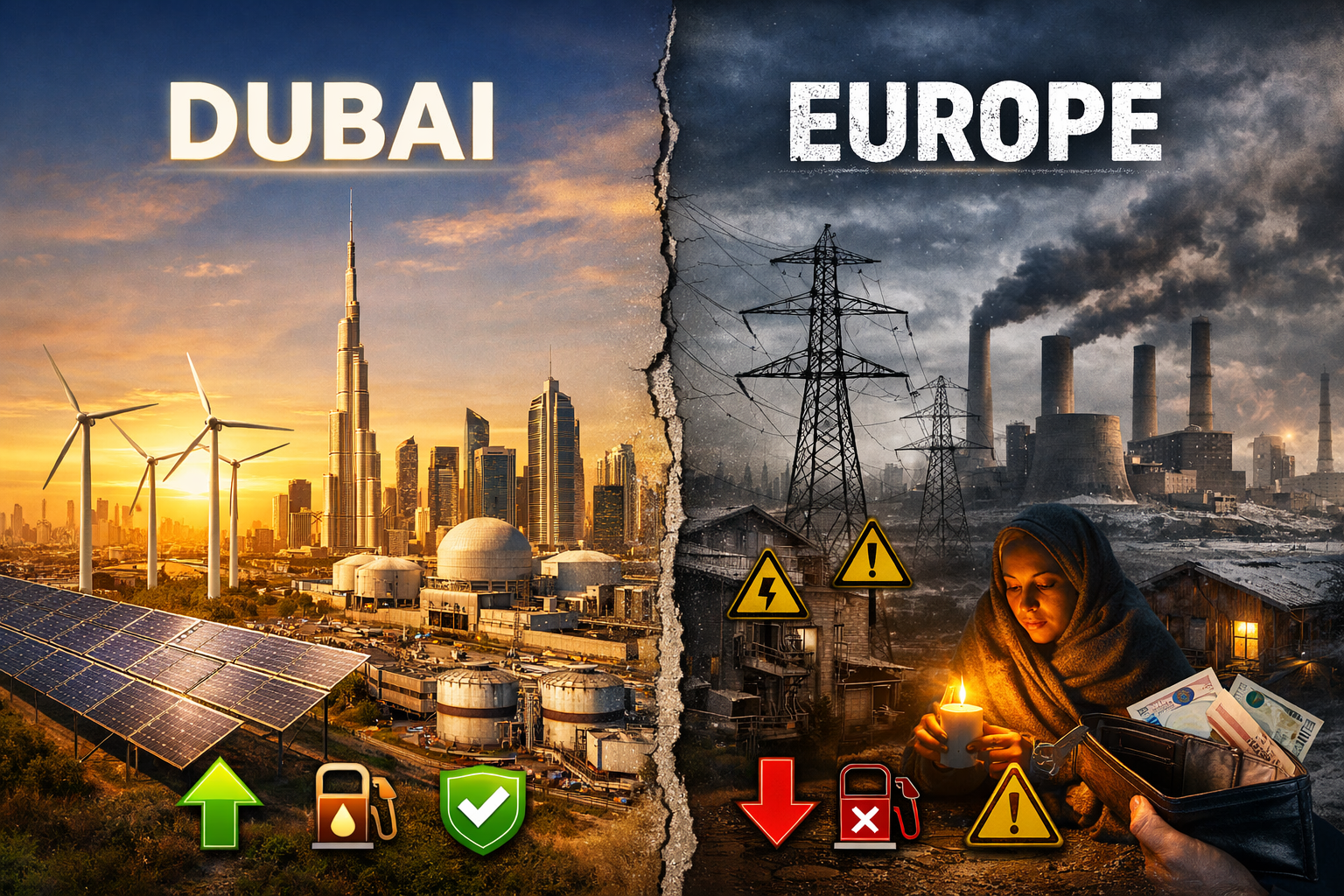
It is also important to keep the scope clear: this is a UAE–Germany partnership, not simply a Dubai investment story. Businesses should assess the relevant partners and locations across both countries rather than treating one city as a substitute for an entire national market.
Internationalisation should begin with a business case—not frustration with one country or fascination with another.
Strong Partnerships Still Require Critical Assessment
Closer economic cooperation does not eliminate geopolitical exposure. In their joint declaration, the two governments condemned Iranian attacks on the UAE and other regional states, as well as interference with shipping through the Strait of Hormuz. Security concerns are therefore explicitly part of the relationship.
For individual projects, I would also insist on clear rules governing ownership, decision-making, intellectual property, data access, financing obligations and exit arrangements. Human-rights considerations and reputational risks belong in that assessment alongside financial and operational questions.
Legal and tax assumptions require particular care. The joint declaration refers to ongoing negotiations on the avoidance of double taxation; it does not announce that a new tax treaty has entered into force.
The principle is simple:
Political support is valuable. It is not a substitute for due diligence.
What Business Leaders Should Do Next
Rather than reacting to the size of the announcements, I recommend three practical steps.
First, define the commercial opportunity. Identify a specific customer problem, a credible offer and the economic benefit for both sides. Interest in a country is not yet a market-entry strategy.
Second, assess potential partners against clear criteria. Look beyond introductions and prestige. Examine delivery capability, financial strength, relevant experience, governance and the actual contribution each party would make.
Third, build a staged execution plan. Start with achievable milestones: customer validation, a pilot project, a distribution arrangement or a defined joint assignment. Set responsibilities, budgets and review points before committing to a larger structure.
This approach allows a business to learn before increasing its exposure. It also creates a basis for deciding when to proceed, when to adjust and when to stop.
The Strategic Lesson: Connect Strengths, Then Deliver
I welcome the deeper relationship between Germany and the UAE. Its importance, in my view, lies not only in the announced investment volume but in the possibility of building commercially useful partnerships.
For entrepreneurs, the task is to identify where their company fits—and where it does not.
There is no need to declare one country the winner and the other the loser. The more valuable question is how to combine the right capabilities, relationships and locations.
Diplomacy can create an opening. A clear offer, a credible partner and disciplined execution turn it into business.
Golden Falcon Consulting: From Strategic Assessment to Practical Action
At Golden Falcon Consulting, we support entrepreneurs and leadership teams with commercial strategy, market positioning, operational improvement and execution. Our approach draws on more than two decades of entrepreneurial and executive experience, with a focus on translating strategic decisions into practical business structures.
For a business evaluating German–UAE opportunities, the first step should be a clear assessment of commercial fit, organisational readiness and realistic next steps.
Considering a partnership, market expansion or strategic repositioning? Let’s examine the business case and define a practical path forward.
Precision. Strategy. Execution.
-
Beyond €40 Billion: What the UAE–Germany Partnership Means for Entrepreneurs and Investors The UAE President’s…
-
Monaco Formula 1 2027 – VIP Balcony Experience
Monaco Formula 1 2027 – VIP Balcony Experience The Monaco Grand Prix is more than…
-
Strategic Decisions, Intuition, and Why the Best Leaders Learn to Trust Their Gut
In business, some of the most important decisions are made long before all facts are…